Solutions: cloud resources, software, data, and more
Helmholtz Imaging provides an integrated ecosystem of software, scientific solutions, and cloud-based resources to support research along the whole imaging pipeline.
Our portfolio is designed to help researchers move seamlessly from data acquisition to analysis, validation, and deployment. By combining methodological expertise with robust infrastructure andnuser-oriented tools, we enable efficient, reproducible, and scalable imaging workflows across scientific domains.
Whether you need access to advanced AI models, support for managing complex image datasets, or tailored solutions for specific research challenges, our resources are built to integrate into real-world scientific environments and foster collaboration across the Helmholtz Association and beyond.
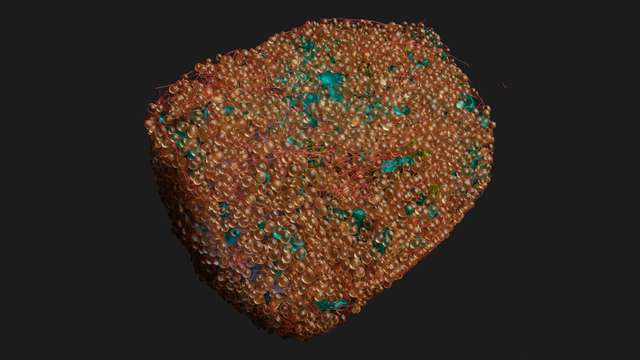
Image: Fabian Falk, KIT
Helmholtz Imaging Solutions include generalizable approaches to common imaging challenges as well as tailored workflows developed in collaboration with scientific partners.
They cover the full imaging pipeline — from data acquisition, and visualization to analysis — and include algorithms, software packages, datasets, protocols, and executable applications. By combining domain expertise, advanced methods, and software engineering, these solutions are designed to be both robust and applicable in practice.
Solutions and software tools for imaging used and developed by the Helmholtz Imaging community are listed at Helmholtz Imaging Solutions. We encourage imaging experts in Helmholtz to make sure their tools, data sets, protocols, publications, white papers, etc. can be discovered by registering to CONNECT and adding them as solutions.
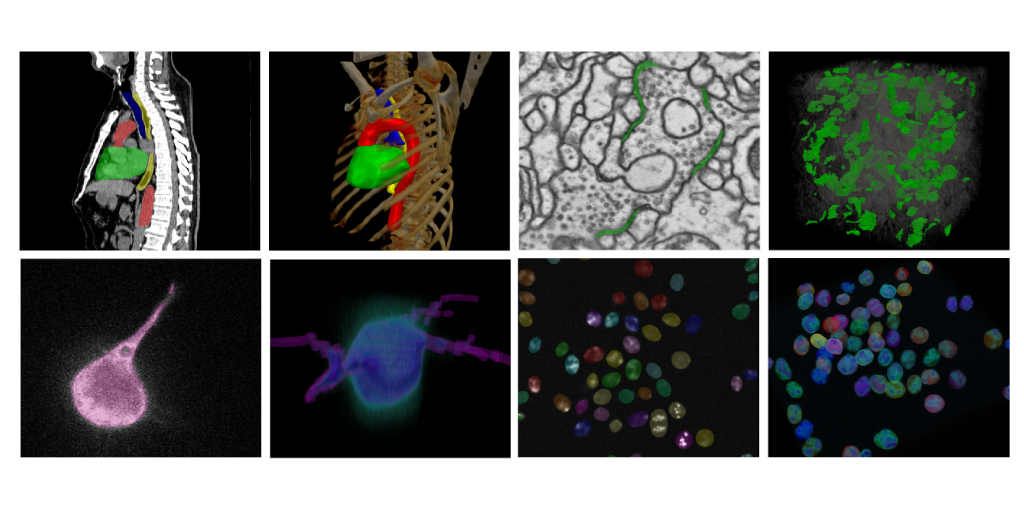
We develop, provide and maintain a range of open-source software tools and solutions that address the most challenging research questions in imaging science.
Our software is designed to be:
- Reusable and adaptable across domainsBy providing reliable and open tools, we help researchers standardize workflows, reduce technical barriers, and accelerate scientific discovery.
- User-friendly and accessible
- Scientifically robust and well-documented
Examples include:
PixelPatrol is a tool designed for the systematic validation of scientific image datasets. It helps researchers proactively assess their data before engaging in computationally intensive analysis, ensuring the quality and…
When confronted with a new dataset, the application of AI-based segmentation methods is non-trivial. Substantial manual effort is required to optimize the network topology, preprocessing, training procedure and inference strategy…
Simultaneous localisation and categorisation of objects, also referred to as object detection, is of high relevance for many applications which rely on rating of objects rather than e.g. pixels or…
Our cloud solutions provide scalable, secure, and easy-to-access infrastructure for working with imaging data, models, and evaluation tools without the need for local setup.
They enable researchers to:
- Access and run machine learning models remotely
- Store, manage, and share large-scale image datasets
- Apply standardized and transparent evaluation methods
All services are designed to ensure data sovereignty while supporting collaboration with and within Helmholtz Centers.
Explore our cloud solutions:

Helmholtz Model Zoo (HMZ) is a cloud-based platform providing remote access to deep learning models within the Helmholtz Association via web interface and REST API.
Scientists from all 18 Helmholtz centers can contribute models through a streamlined GitLab submission process, with automatic interface generation, testing, and deployment.
Running on GPU nodes at DESY Hamburg using NVIDIA Triton Inference Server, HMZ ensures data sovereignty by keeping all data within the Helmholtz Association while offering unrestricted inference capacity with fine-grained access control through Helmholtz Virtual Organizations.
The Helmholtz Model Zoo is developed and maintained by the Helmholtz Imaging Engineering and Support Team at DESY, with support from HIFIS, the DESY IT team, Helmholtz AI, and funding from the HAICORE initiative.
Access HMZ at hmz-hub.desy.de (support at support@helmholtz-imaging.de)

OMERO is a powerful, open-source image data management platform that empowers researchers with a secure, centralized environment to store, visualize, organize, process, and share image data at scale.
From measurement to publication, OMERO streamlines the entire research workflow — keeping your data accessible, structured, and ready for discovery.
OMERO helps research teams manage complex datasets efficiently, promote reproducibility, and drive open, interdisciplinary collaboration. Backed by the Open Microscopy Environment OME) and a vibrant community of users and developers, OMERO is a future-proof choice for any researcher who wants to stay organized, collaborate seamlessly, and make the most of their image data.
This Helmholtz OMERO instance brings these capabilities to the entire Helmholtz community — supporting collaboration across institutes and research partners and welcoming experts from all scientific fields, not just microscopy.
Hosted in Germany at HMGU in Munich, and set up with HIFIS and the support of Helmholtz Imaging, it offers a trusted, sustainable infrastructure for image data management.
How to get Access
This service requires no preconditions to be fulfilled before service usage. Click the Button “Go to service” on OMERO and login via the Helmholtz ID. Your account will be provisioned automatically.
Claims Reloaded
Performance comparisons are fundamental in imaging AI research, often driving claims of superiority based on relative improvements in common performance metrics. However, such claims frequently rely on empirical mean performance. Claims Reloaded assesses the validity of claims of superior performance in segmentation and classification tasks, enabling researchers and reviewers to detect unsupported claims.
Metrics Reloaded
Reliable validation is crucial for translating image analysis algorithms into real-world applications. Yet, many studies use inappropriate performance metrics that misrepresent the underlying problem.
The Metrics Reloaded online toolkit helps researchers choose suitable performance metrics based on an expert-informed recommendation framework.
Covering image classification, segmentation, and detection tasks, it provides interactive guidance, explanations, and curated metric resources to foster transparent and problem-aware validation and performance assessment.
Rankings Reloaded
Rankings Reloaded helps researchers identify strengths and weaknesses of algorithms for both individual benchmarking experiments and large-scale challenges.
It provides robust and accurate uncertainty analysis and visualization of algorithm performance.

We develop, provide and maintain a range of op work, publish your data. Helmholtz.Cloud services are available to everyone at Helmholtz and their collaboration partners. Thanks to the Helmholtz ID, you can login to all services with your home institution credentials.
The services include:
- Software Engineering – e.g., Helmholtz Codebase, Helmholtz Research Software Directory
- Writing & Editing – e.g., Overleaf, HedgeDoc, BLABLADOR
- Data Management – e.g., SciCat, OMERO, dCache InfiniteSpace
- Data Analysis & Compute – e.g., Jupyter on GPU, HAICORE, Apptainer
- Networking – e.g., Let’s meet!, Indico, Helmholtz Imaging CONNECT
HIFIS sustainably protects sensitive data by storing and processing it in Helmholtz-owned data centers. This ensures that data remains within the German research landscape and is available to current and future generations of researchers.