Published on 03.02.2026
Summer School: Physics of Imaging
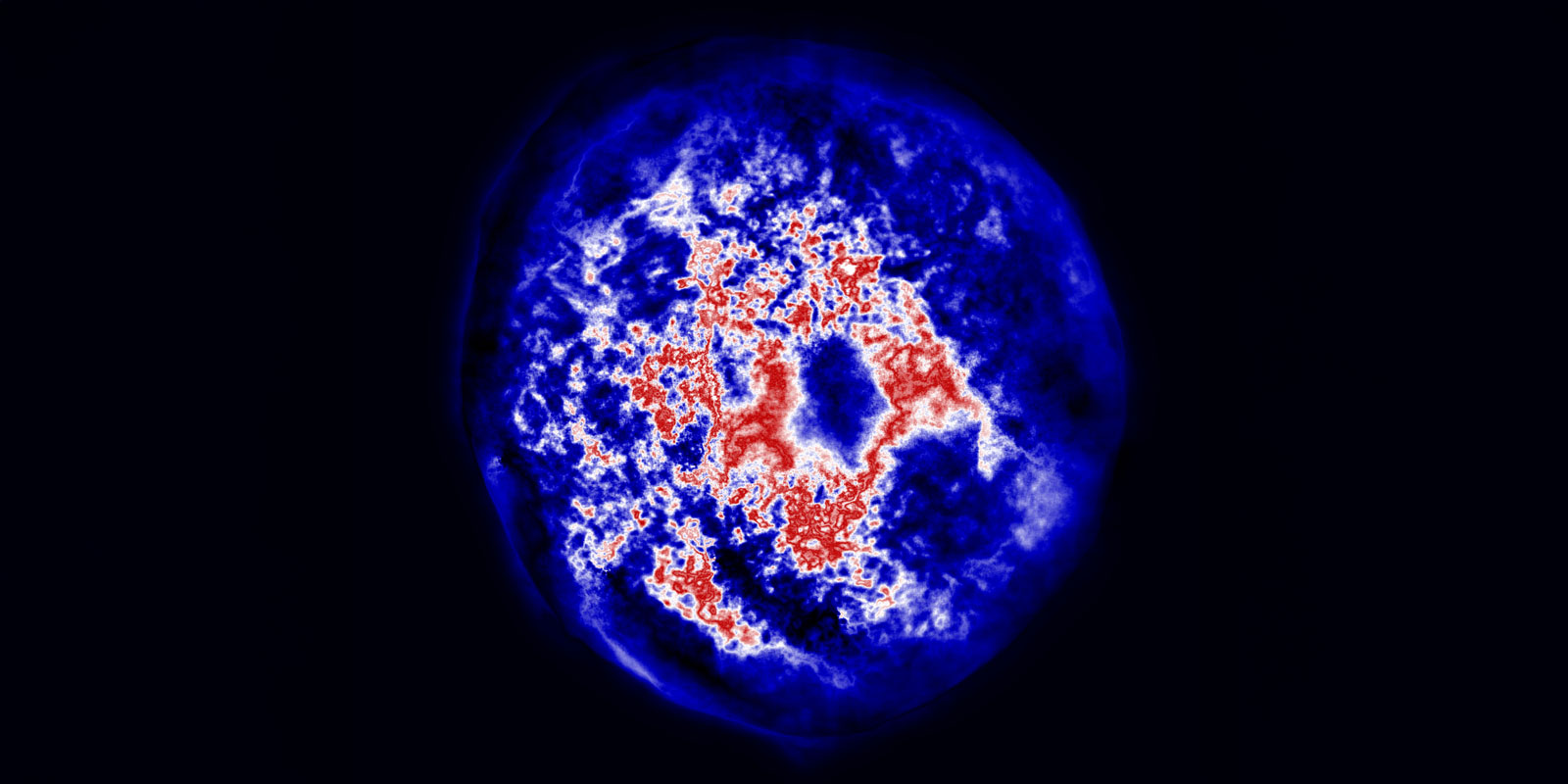
Phase retrieval, holography, tomography, coded signals and novel contrast mechanisms, imaging has been enhanced and extended by computational approaches, regularized reconstruction algorithms, and artificial intelligence. When lenses are lacking or limited in performance, such as for hard X-rays, novel schemes of coherent diffractive imaging have emerged, enabling three-dimensional imaging in bulk specimen or tissues. In computational imaging with visible light coded signals, photon correlations, and quantum entanglement have been started to be exploited. Turbid media and deep tissues become increasingly accessible. Across almost the entire spectral range of electromagnetic waves, and also for particle waves, we can now see novel schemes and applications emerging.
In this interdisciplinary field, at the cross-roads of experimental physics, signal processing, computational image processing, mathematics of inverse problems, this school focuses on the fundamentals and the underlying concepts, and aims at highlighting the interplay of physical encoding by experimental design and computational decoding by reconstruction algorithms.
The school is intended for PhD students and advanced master students entering research in the fields of computational imaging, physical optics, and mathematics of inverse problems in imaging, which seek an interdisciplinary perspective right from the start. More advanced PhD students and postdocs which are already practitioners in their special fields (e.g. X-ray imaging, electron and light holography, visible light ptychography, computational imaging and AI) but which want to broaden their expertise by educating themselves in related fields are equally included in the scope of the school.
Lectures & Speakers:
- Computational Imaging, Yoav Shechtman (Haifa, Israel)
- X-ray darkfield imaging, Kaye Morgan (Melbourne, Australia)
- Randomness and Imaging, Jonathan Dong (Lausanne, Switzerland)
- Inverse Problems in Imaging, Anne Wald (Göttingen, Germany)
- X-ray Holography and Phase Retrieval, Max Langer (Grenoble, France)
- X-ray Ptychography, Pierre Thibault (Trieste, Italy)
- Electron Ptychography, Philipp Pelz (Erlangen, Germany)
- Nanoscale X-ray Imaging, Manuel Guizar Sicairos (Villingen, Switzerland)
- Histology with Phase Contrast Imaging, Anne Bonnin (Villingen, Switzerland)
- Tomography I, Viktor Nikitin (Argonne, USA)
- Tomography II, Joost Batenburg (Leiden, Netherlands)
- Magnetic Resonance Imaging, Mariam Andersson (Copenhagen, Denmark)
- Optoacoustic & Speed-of-sound Imaging, Michael Jaeger (Bern, Switzerland)
- AI for Imaging, Julian Tachella (Lyon, France)
- Super-Resolution Imaging, Rainer Heintzmann (Jena, Germany)
Scientific organizers:
- Tim Salditt (U Göttingen, Germany)
- Marina Eckermann (U Bern, Switzerland)
- Leon Lohse (U Hamburg, Germany)
- Rebecca Spiecker (KIT, Germany)