AI-based classification of phytoplankton community composition from field samples
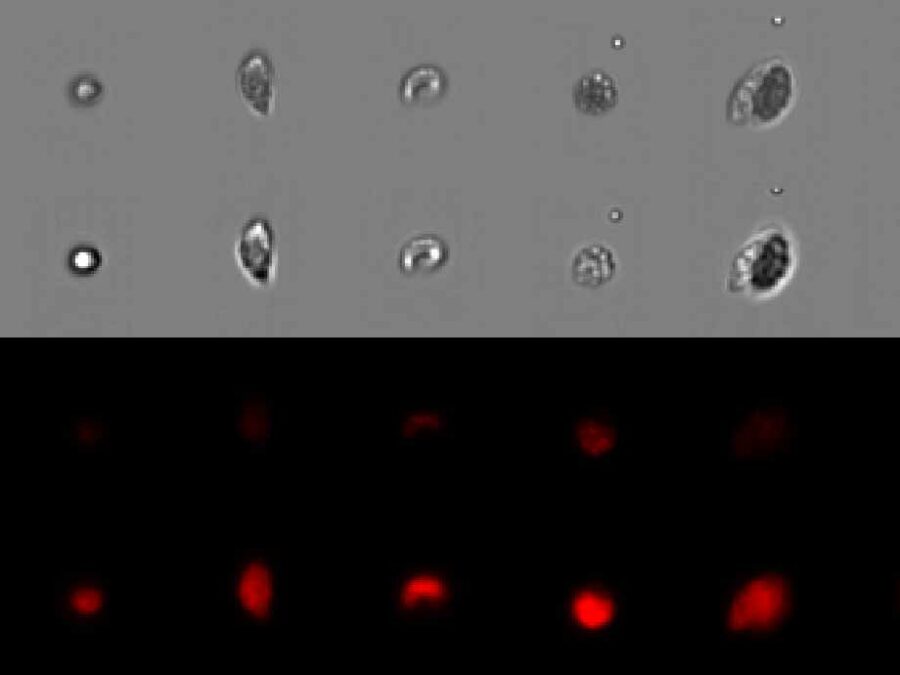
Phytoplankton biodiversity is a key indicator of marine ecosystems health. Due to climate change derived impacts, phytoplankton communities worldwide are being affected by changes in the water temperatures and the access to nutrients and light. Current methods to quantitatively classify phytoplankton samples require taxonomy experts to manually count and classify the individual cells they see under the microscope.
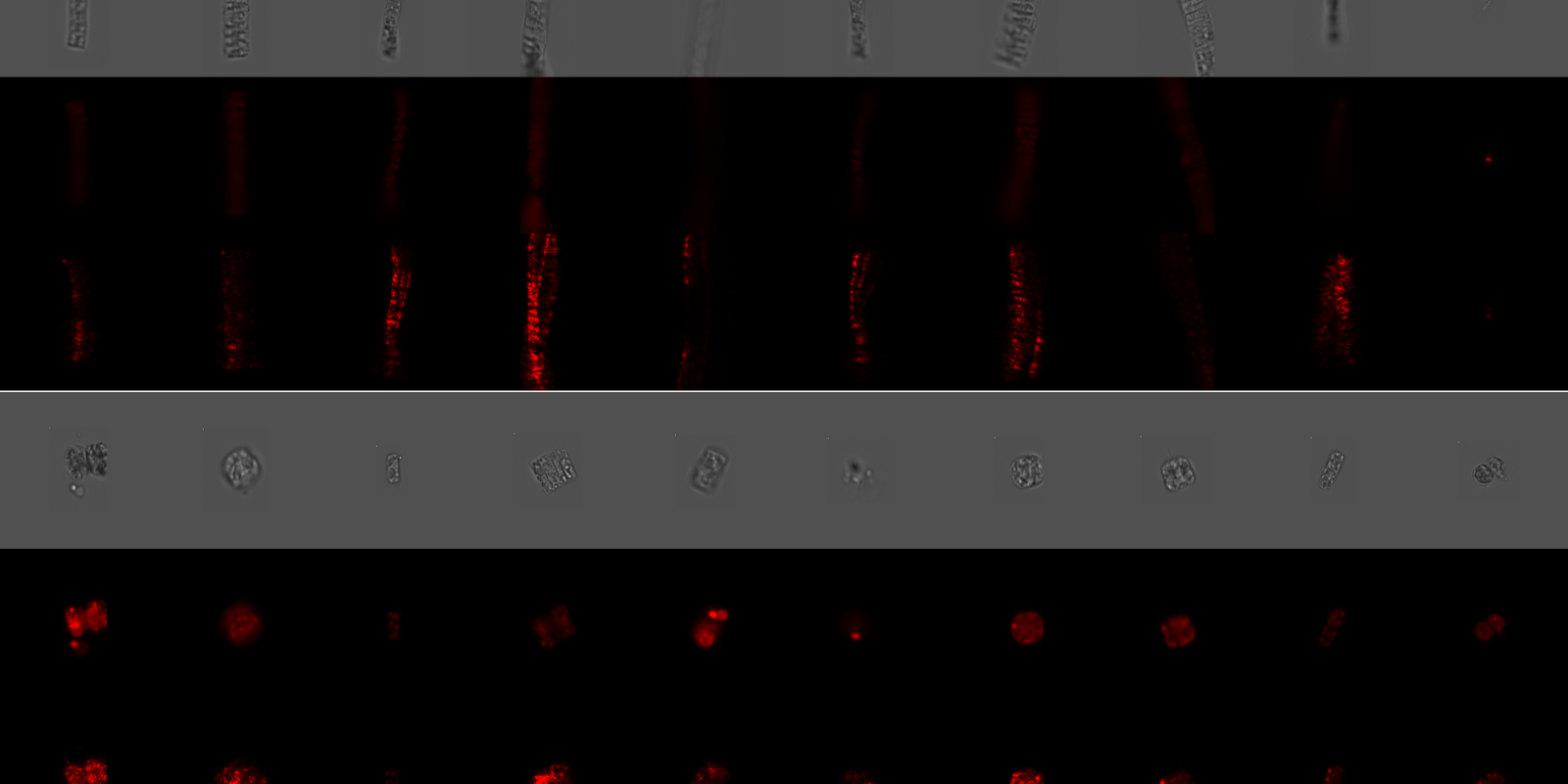
To understand how climate change is impacting phytoplankton biodiversity we need to develop novel high-throughput imaging techniques to analyze faster changes in biodiversity. With an AMNIS Imaging Flow Cytometer we can quickly produce millions of multi-channel images of phytoplankton lab cultures and field samples of phytoplankton. Using an AI-based approach we are developing an image-based selection tool to rapidly and accurately classify the phytoplankton community.
This pipeline will be applicable to phytoplankton populations from diverse source waters and could offer a high-throughput taxonomy approach to traditional light microscopy.
Other Collaborations

Understanding and analyzing plant roots using semantic segmentation of MRI images
The optimization of plants has long focused on the above-ground parts. Recently, new efforts are being made to exploit the potential below ground. To this end, our partners at the FZJ have developed an imaging system which enables imaging the root system throughout the growth of the plants using MRI. Besides qualitative analysis, a precise […]
BetaSeg
Volume electron microscopy is the method of choice for the in situ interrogation of cellular ultrastructure at the nanometer scale, and with the increase in large raw image datasets generated, improving computational strategies for image segmentation and spatial analysis is necessary. Here we describe a practical and annotation-efficient pipeline for organelle-specific segmentation, spatial analysis and […]