Published on 14.10.2026
New Data Curation Unit & Host Lab at UFZ
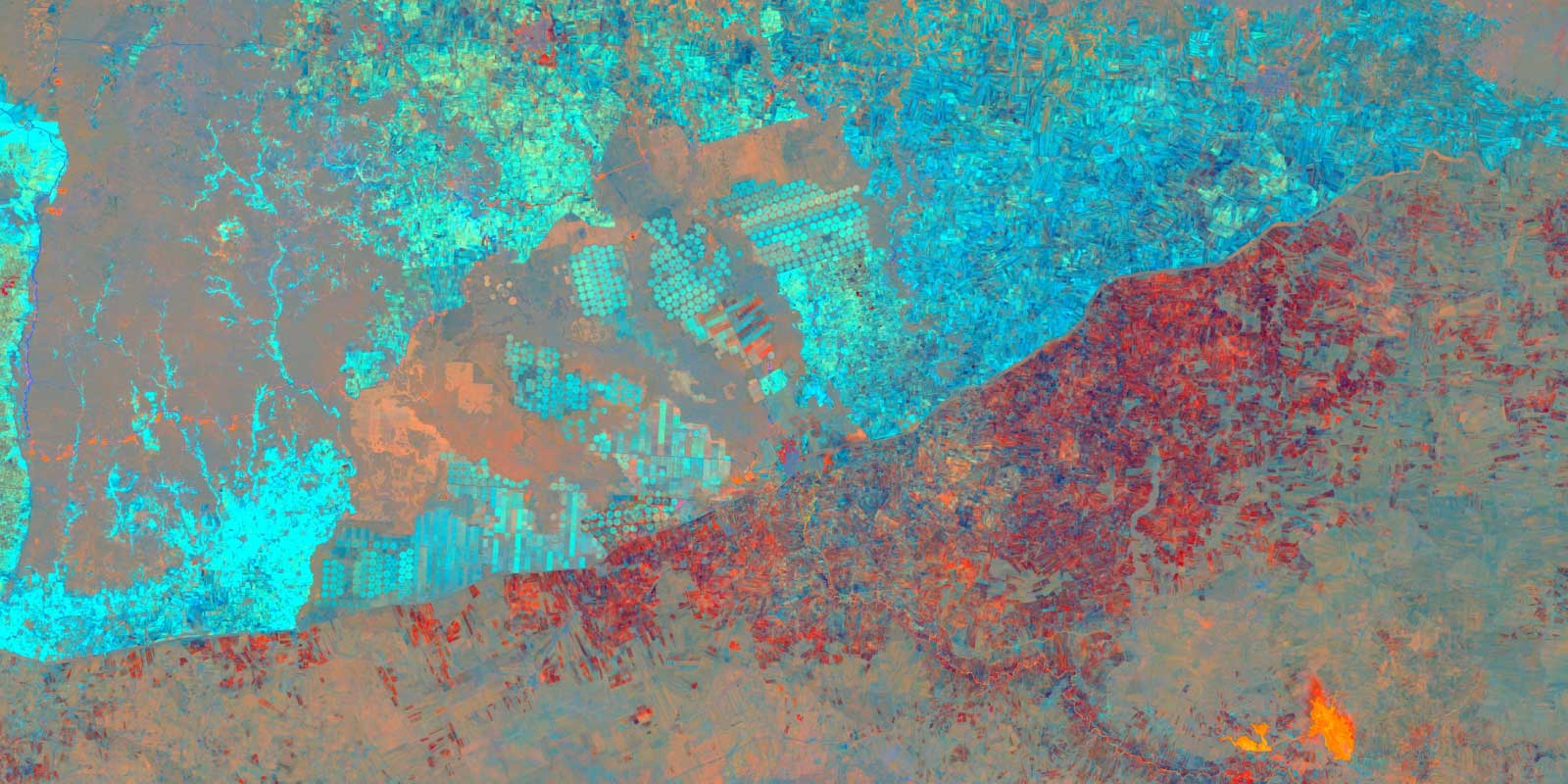
Helmholtz Imaging is launching the Data Curation Unit, a new initiative dedicated to addressing a critical challenge in modern science: the systematic curation of imaging data. At the same time, the network expands with a fourth host lab at the Helmholtz Centre for Environmental Research (UFZ) in Leipzig.
Across the Helmholtz Association, image data curation has emerged as a central bottleneck for imaging research, limiting the usability and impact of valuable datasets.
A bottleneck in the imaging pipeline
While significant attention is often given to data analysis and AI methods, the preceding step – curating high-quality and usable image data through acquisition, formation, assessment, and annotation – is frequently overlooked. This results in inconsistent data quality and limits the effectiveness of downstream analysis.
The new unit directly addresses this gap.
The Data Curation Unit will act as a central hub for image data curation across Helmholtz, providing:
- Systematic support for image acquisition, formation, assessment, and annotation
- Guidance, tools, and training for researchers
- Scalable solutions applicable across scientific domains
A key objective is to enable researchers to curate their data more effectively while reducing the need for highly individualized support.
Support for researchers
Researchers who need support with image data curation will be able to reach the unit via the Helmholtz Imaging Support Hub. Depending on the request, support may include guidance on metadata structures, dataset quality assessment, annotation strategies, bias and distribution-shift analysis, visual data exploration, FAIR publication or related tooling.
From curated data to flagship datasets
Beyond supporting individual projects, the unit will contribute to making curated datasets accessible according to the FAIR principles. A central initiative will be the development of Helmholtz Imaging Flagship Datasets – high-quality, curated datasets published as international benchmarks.
New host lab at UFZ
With the addition of UFZ in Leipzig as a fourth host lab, Helmholtz Imaging continues to expand its distributed structure across the Helmholtz Association. UFZ contributes expertise in visual analytics and interpretation of complex large-scale geospatial and imaging datasets, including the analysis of spatio-temporal patterns, variability, clusters, and potential distribution shifts across Earth observation and Earth system model simulations.
Interview with Manuel Haussmann, Data Duration Unit Lead

To mark the launch, we spoke with Manuel Haussmann, who will take up his position as Head of the Helmholtz Imaging Data Curation Unit on November 1, about the challenges and opportunities ahead.
Helmholtz Imaging: You are the lead of the new Helmholtz Imaging Data Curation Unit. Welcome. 🙂 What are current challenges in imaging data handling that will be addressed by the unit? Why is image data curation the central bottleneck in imaging research today?
Manuel: Imaging research has become very good at collecting images and building models based on them. However, the knowledge needed to ensure these data are well curated and suited to a model is still fragmented across research groups.
The same questions about metadata, annotation, and quality control are answered in every project. This has always tied up valuable research time, but as datasets grow and models become more capable, it is becoming the limiting factor. Curation determines both how efficiently we work and whether we can trust our results.
If the unit is successful, what kind of impact will researchers actually feel?
They will need to spend less time reinventing the wheel, as templates and tools will already be there when a project starts.
Problems such as labeling inconsistencies or distribution shift will be detected early on, and their datasets will be easier for others to reuse at a later date.
Why is high-quality curation essential for training reliable AI models? Are we currently overestimating algorithms and underestimating data quality?
There is an old concept in computer science, “garbage in, garbage out”, i.e., an algorithm can only be as good as the data it trains on.
Obvious “garbage” is usually detectable and not a problem; the real dangers are subtle problems: hidden biases and confounders, spurious correlations, or distribution shifts that result in models that seemingly perform well but have picked up incorrect patterns along the way and fail once new data arrives.
While the field rewards breakthroughs in algorithmic development, this underlying work on the data itself tends to be less visible and therefore receives less credit.
What kind of support can they expect at different stages?
Before acquisition, we offer guidance on formats, acquisition strategies, and metadata schemas, so the right information is captured from the start. After acquisition, we provide tools for quality assessment, descriptive statistics, and visual exploration to spot outliers and shifts early.
Before training, we help with annotation strategies, dataset composition, and bias analysis. And at the end, we support publishing FAIR, reusable datasets, including the Helmholtz Imaging Flagship Datasets. The entry point is the Support Hub, and training formats help researchers do much of this themselves.
What excites you most about building this unit from scratch?
What excites me most is the cross-center structure: building one team across DKFZ, DESY, MDC, and UFZ, finding problems that recur across imaging domains, and solving them together instead of four times in isolation.
My own research has often been about what models don’t know, such as uncertainty, noisy and missing data, or distribution shift.
I’m looking forward to tackling these problems and the wider challenges of curation early on, so that researchers can spend their time on scientific questions, building on data they can trust.
Thank you, Manuel! We’re happy to have you, and are looking forward to working and advancing imaging science together.
Looking ahead
The Data Curation Unit represents a significant step in strengthening Helmholtz Imaging’s mission to support cutting-edge imaging science. By focusing on data as a foundational element, the initiative will contribute to more reproducible, scalable, and impactful research.
Join our Helmholtz Imaging Conference on November 10-12 to meet the new data curation team in person and ask any question you may have.